
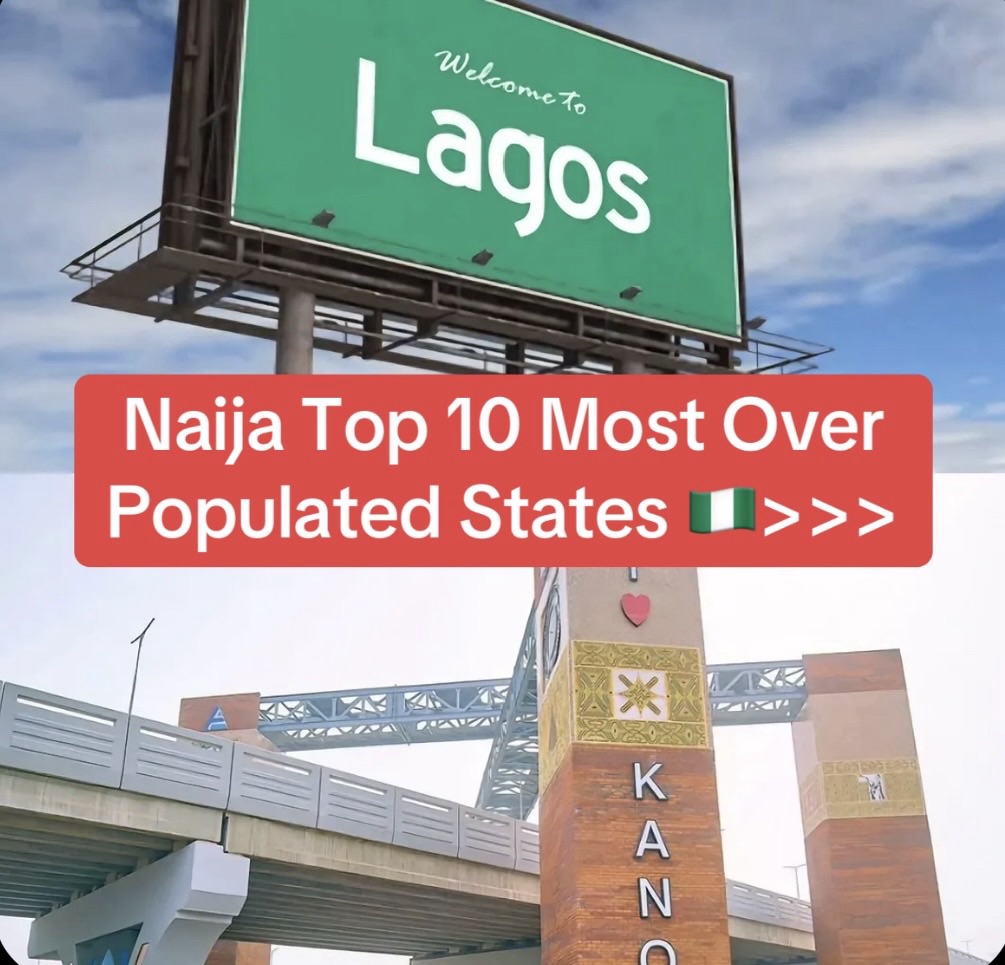
Nigeria is home to more than 200 million people, spread across 36 states and the Federal Capital Territory. From the busy streets of Lagos to the historic cities of northern Nigeria, each state has its own culture, traditions, industries, and attractions.
But which states have the largest populations?
Here are 10 of Nigeria’s most populated states, along with their estimated populations, numbers of local government areas, and some interesting facts about what makes each state special.
1. Kano State

- Estimated population: Approximately 15.7 million
- Number of LGAs: 44
- Capital: Kano
Kano is one of Nigeria’s most important commercial and cultural centres. Known for its historic city walls, traditional dye pits, bustling markets, and rich Hausa heritage, the state has played a major role in regional trade for centuries. Its famous Kurmi Market is among the historic markets associated with northern Nigeria’s trading tradition.
2. Lagos State
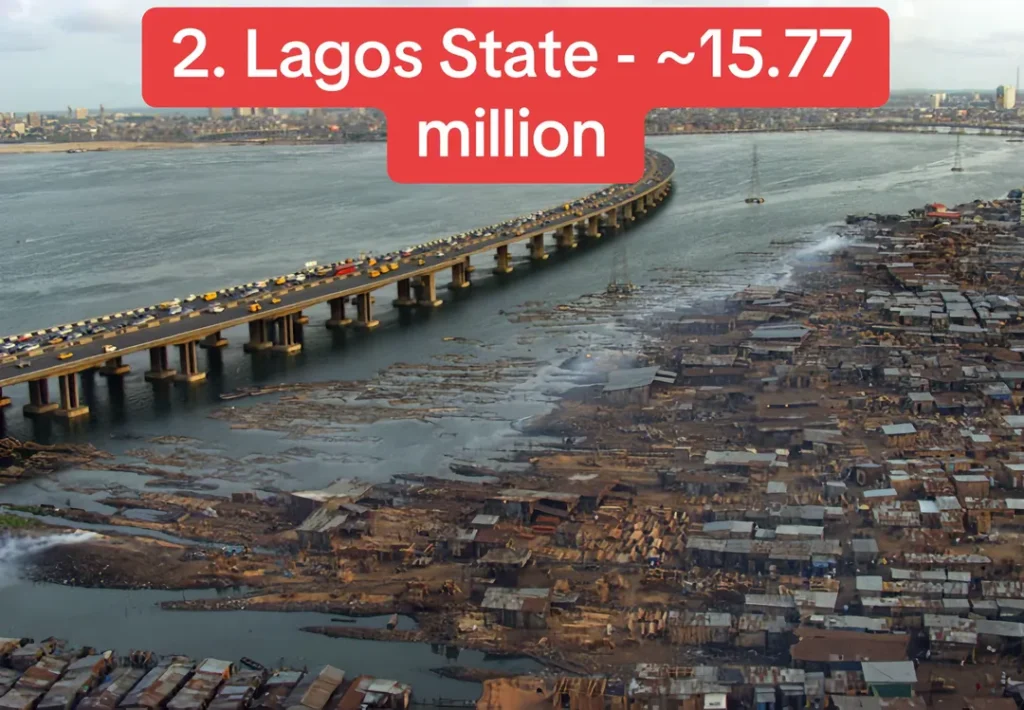
- Estimated population: Approximately 15.77 million
- Number of LGAs: 20
- Capital: Ikeja
Lagos is Nigeria’s economic powerhouse and one of Africa’s most vibrant urban centres. It is famous for its entertainment industry, beaches, nightlife, business districts, and diverse population. From the commercial activity of Lagos Island to the modern developments around Lekki, the state attracts people seeking business, education, and career opportunities.
3. Katsina State

- Estimated population: Approximately 9.3 million
- Number of LGAs: 34
- Capital: Katsina
Katsina is known for its rich Hausa-Fulani culture, traditional architecture, and historic emirate system. It is also an important agricultural state, with farming and livestock playing significant roles in local livelihoods. The famous Gobarau Minaret in Katsina city reflects the state’s long history of Islamic scholarship and architecture.
4. Kaduna State
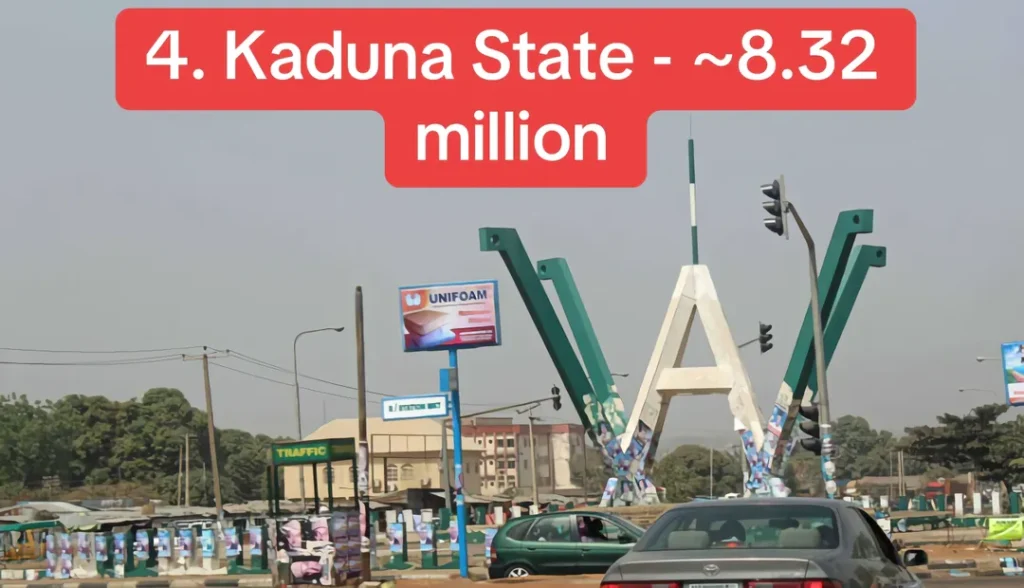
- Estimated population: Approximately 8.32 million
- Number of LGAs: 23
- Capital: Kaduna
Kaduna is an important centre for education, agriculture, industry, and transportation in northern Nigeria. The state is home to several educational institutions and the historic city of Zaria, known for its traditional institutions and Ahmadu Bello University. Its cultural diversity makes it one of the country’s notable meeting points for different communities.
5. Bauchi State
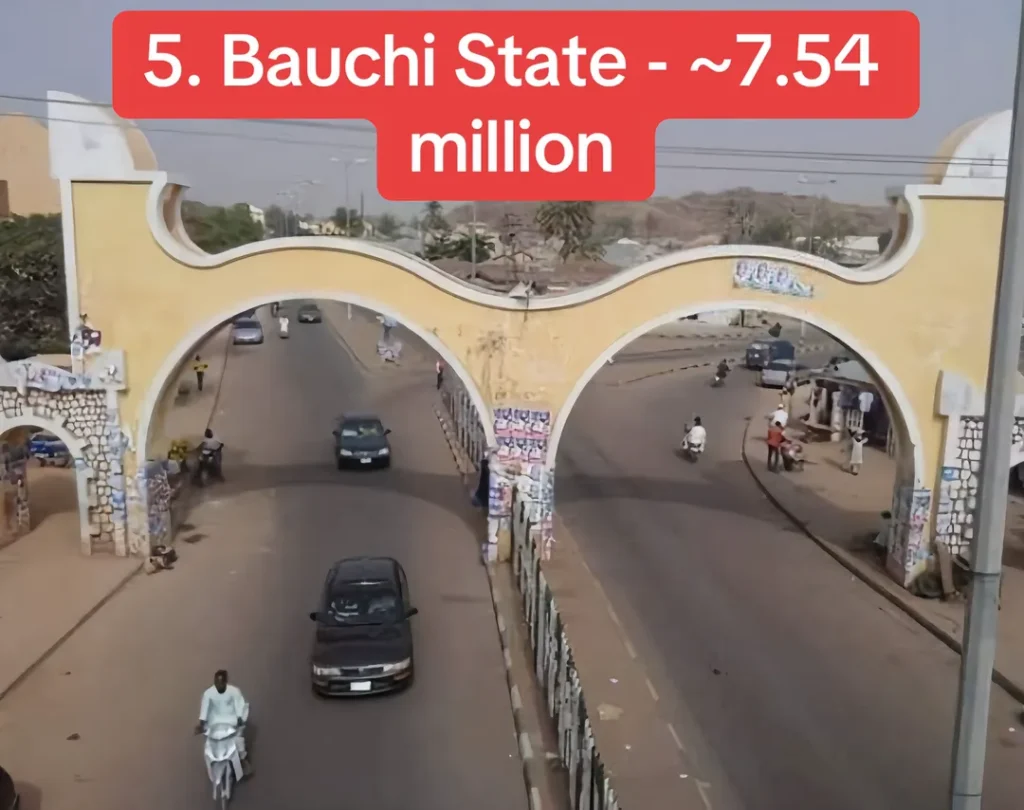
- Estimated population: Approximately 7.54 million
- Number of LGAs: 20
- Capital: Bauchi
Bauchi is known for its natural beauty, wildlife, and cultural heritage. One of its biggest attractions is Yankari Game Reserve, a major wildlife destination famous for its warm springs and diverse animal life. Agriculture also remains an important part of the state’s economy.
6. Oyo State
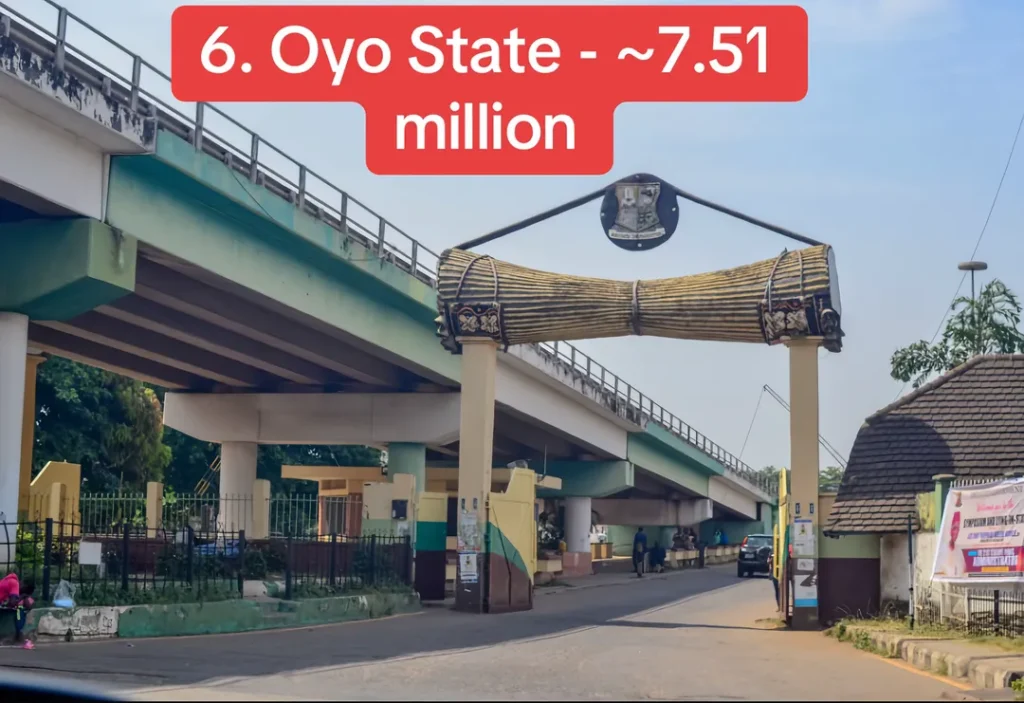
- Estimated population: Approximately 7.51 million
- Number of LGAs: 33
- Capital: Ibadan
Oyo State is deeply connected to Yoruba history and culture. Its capital, Ibadan, is one of Nigeria’s largest historic cities, while the state is also associated with the legacy of the old Oyo Empire. Visitors can explore cultural landmarks, traditional festivals, and the natural scenery around places such as the Ado-Awaye Suspended Lake.
7. Anambra State
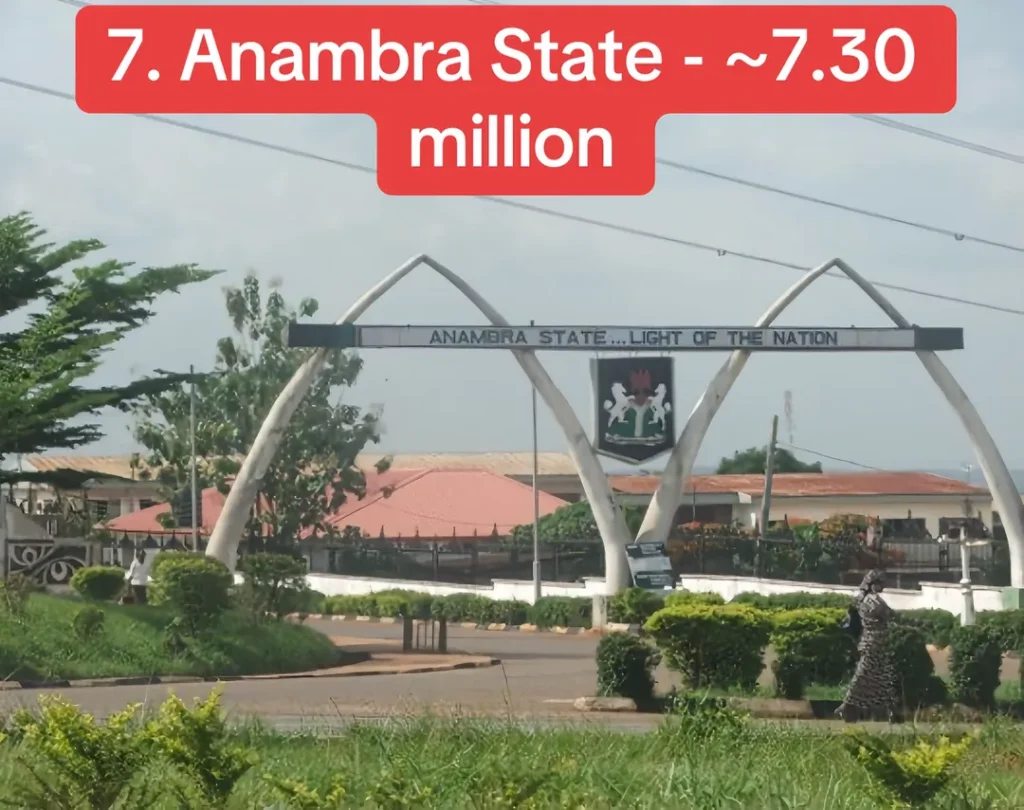
- Estimated population: Approximately 7.30 million
- Number of LGAs: 21
- Capital: Awka
Anambra is known for its entrepreneurial spirit, commercial activity, and rich Igbo heritage. Onitsha is home to one of West Africa’s best-known large markets, attracting traders and customers from different parts of Nigeria and beyond. The state is also associated with traditional craftsmanship, festivals, and vibrant business communities.
8.Rivers State
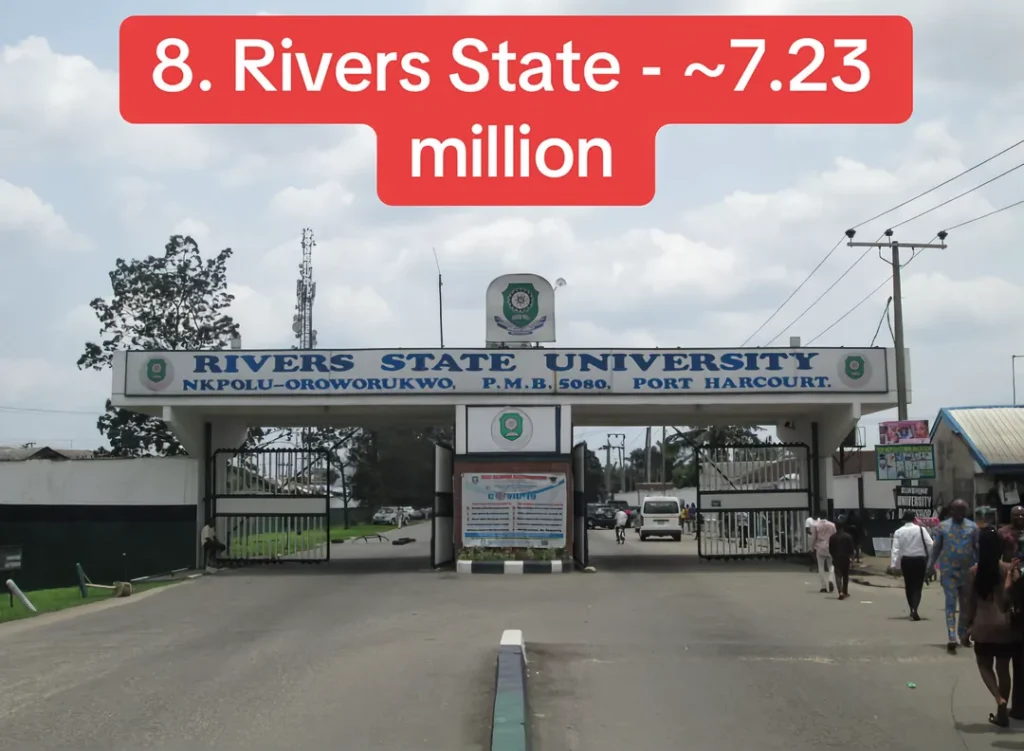
- Estimated population: Approximately 7.23 million
- Number of LGAs: 23
- Capital: Port Harcourt
Rivers State is a major centre of Nigeria’s oil and gas industry. Its capital, Port Harcourt, is known as the Garden City and is an important commercial hub in the Niger Delta. The state is also rich in riverine landscapes, seafood, local cuisine, and diverse cultural traditions.
9.Jigawa State
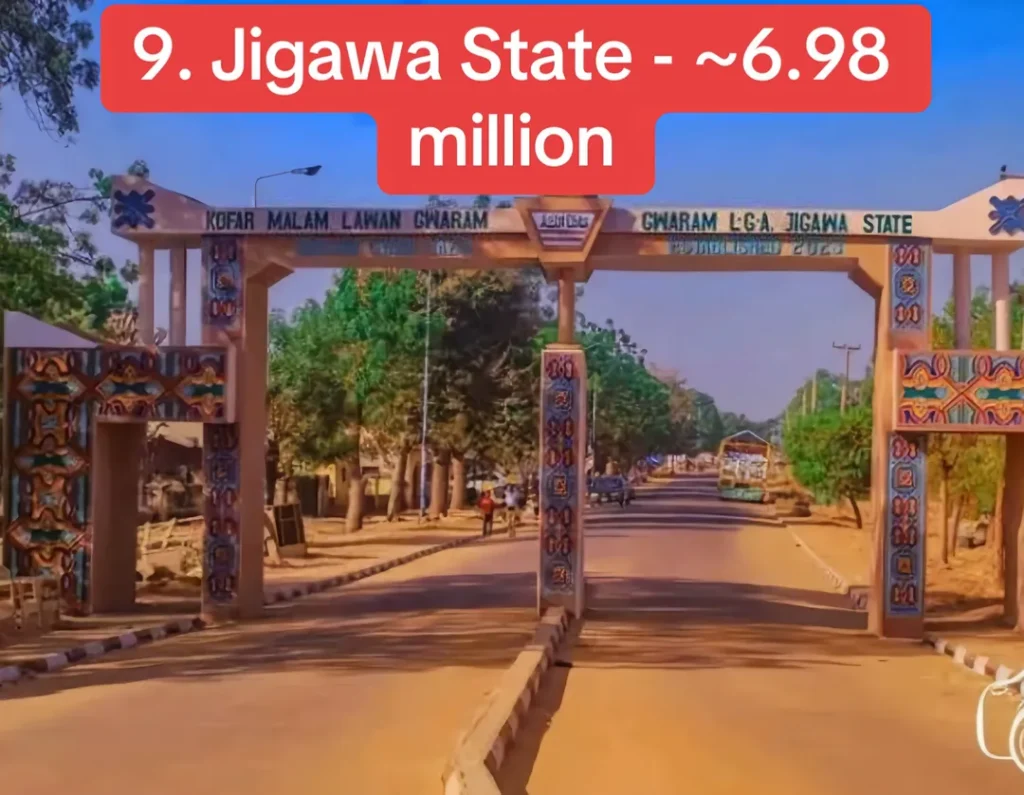
- Estimated population: Approximately 6.98 million
- Number of LGAs: 27
- Capital: Dutse
Jigawa is known for its agricultural activities, traditional communities, and peaceful rural landscapes. Farming is central to many communities, with crops such as rice, millet, and groundnuts contributing to local livelihoods. The state’s traditional festivals and cultural practices also reflect the heritage of northern Nigeria.
10.Niger State
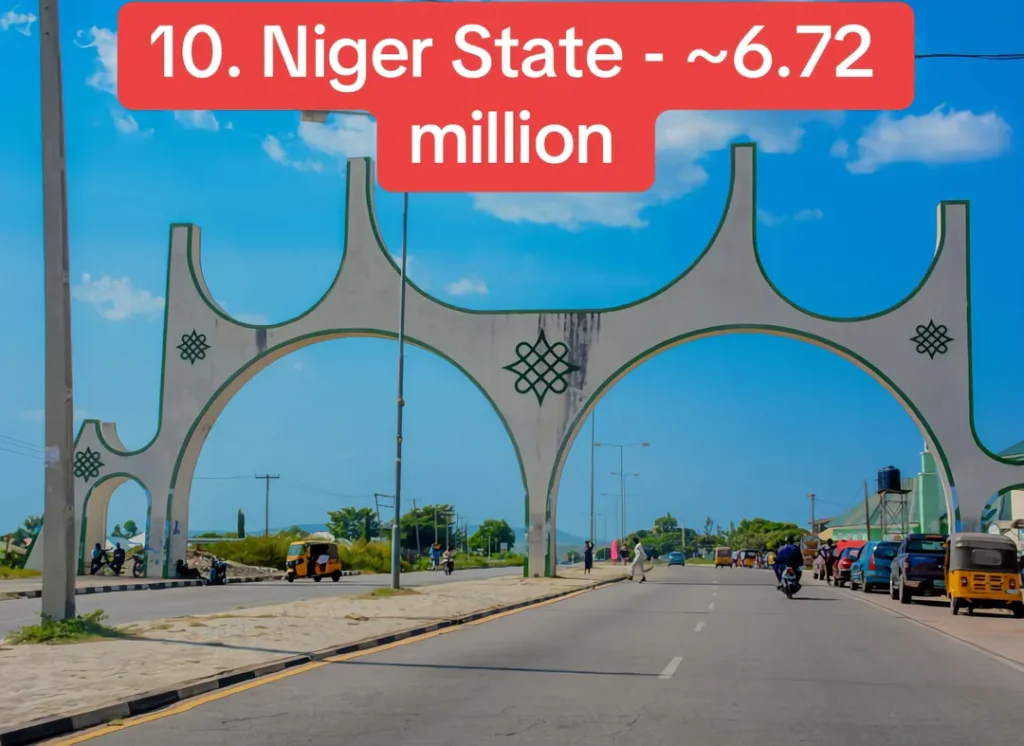
- Estimated population: Approximately 6.72 million
- Number of LGAs: 25
- Capital: Minna
Niger State is Nigeria’s largest state by land area. It is home to important hydroelectric power facilities, including the Kainji and Shiroro dams, which contribute to electricity generation in the country. The state also features beautiful natural landscapes and the famous Gurara Falls.
Nigeria’s Population Story
From the commercial energy of Lagos and Kano to the agricultural communities of northern Nigeria and the oil-producing areas of the Niger Delta, these states highlight the country’s remarkable diversity.
Population figures are estimates, not exact headcounts. Nigeria’s last completed national population census was conducted in 2006, so newer figures are based on projections and estimates that can differ between sources.
Which of these states have you visited, and which one would you love to explore?
Leave a Reply