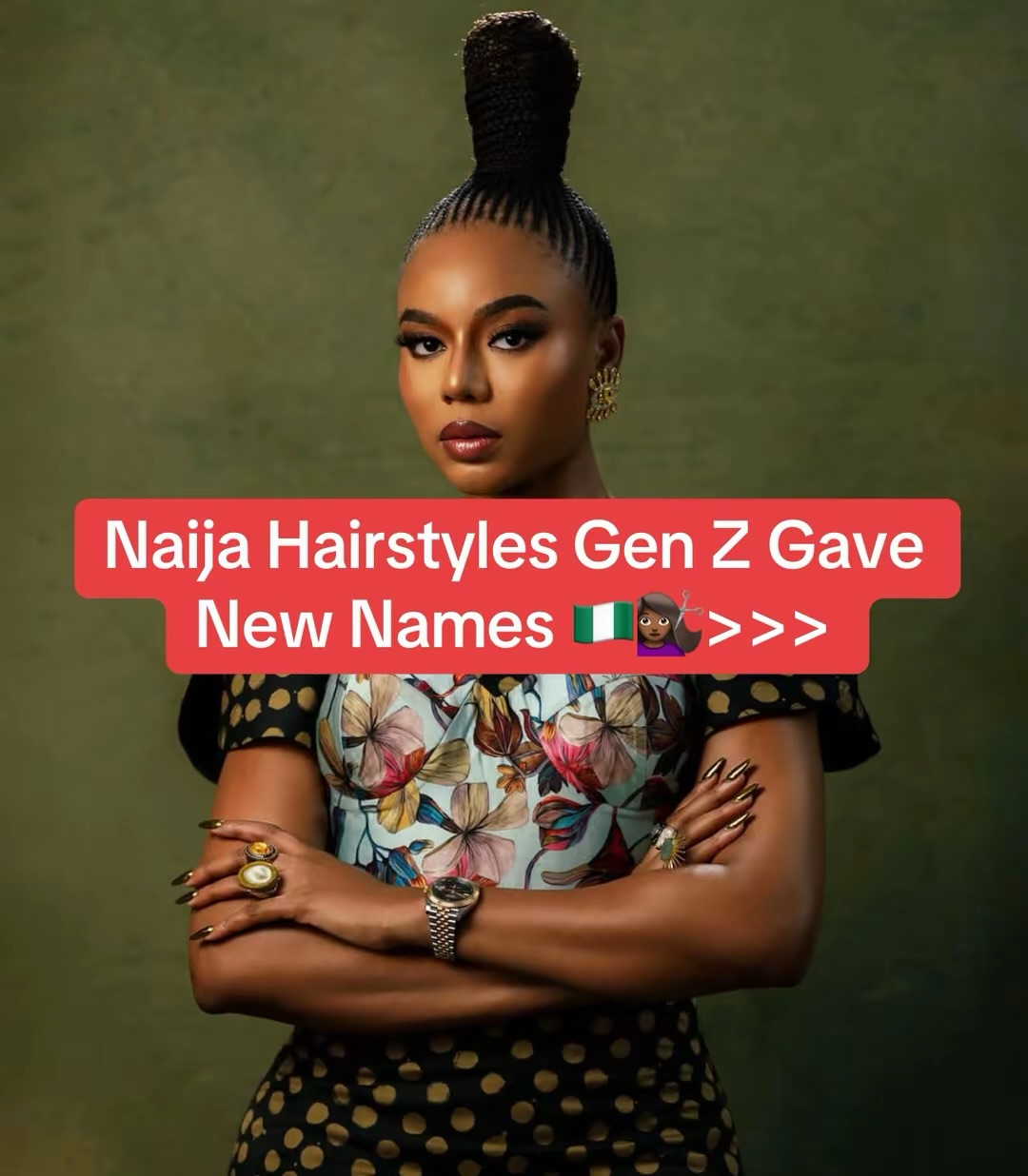
If you grew up in Nigeria, chances are you remember walking into a salon and asking for a packing gel, a Rihanna, or a set of Ghana weaving. But today, some of those familiar hairstyles have new names, thanks to Gen Z and the beauty trends taking over social media.
What our mothers and older sisters have known for years is now being presented with fresh names, trendy descriptions, and a little rebranding.
From packing gel becoming a ponytail to Ghana weaving becoming feed-in braids, here are some Nigerian hairstyles you probably knew by another name!
1. Packing Gel – Now Called Ponytail
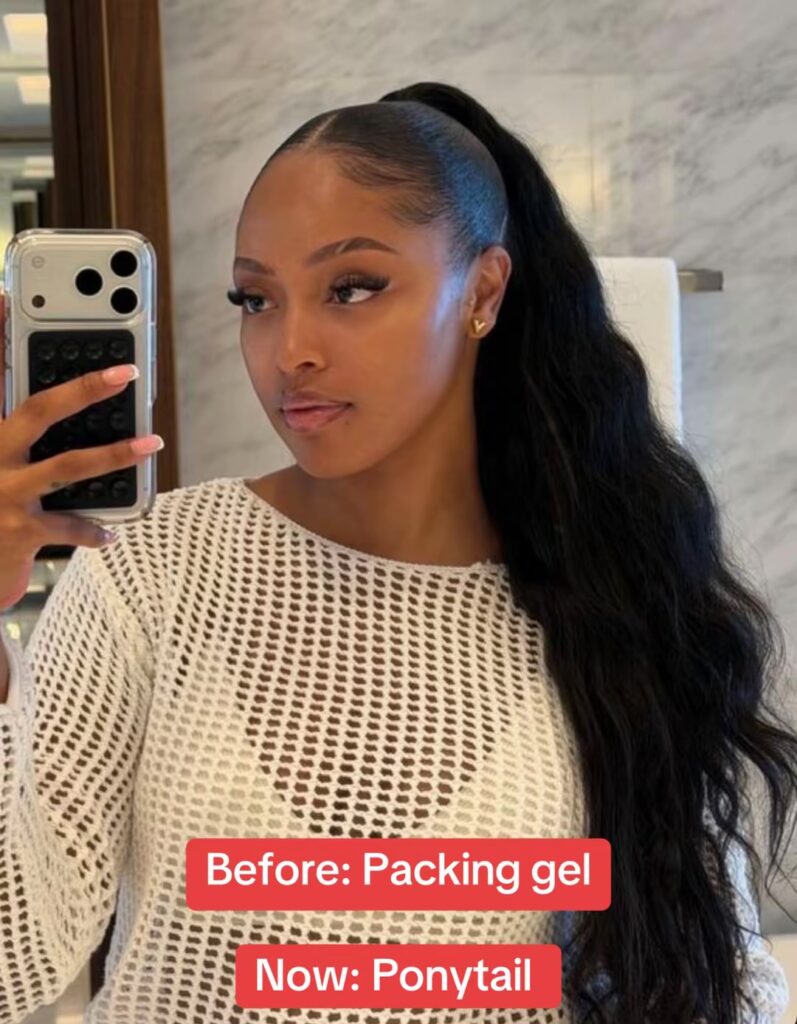
Remember when packing gel meant gathering your hair, applying enough gel to make it smooth, and securing it into a neat ponytail? Whether you were going for a sleek look or adding extensions for extra length, it was a classic Nigerian hairstyle. Today, the term ponytail is more commonly used, especially for the sleek, polished versions popular on social media.
2. Fixing or Weave-On -Now Called Sew-In
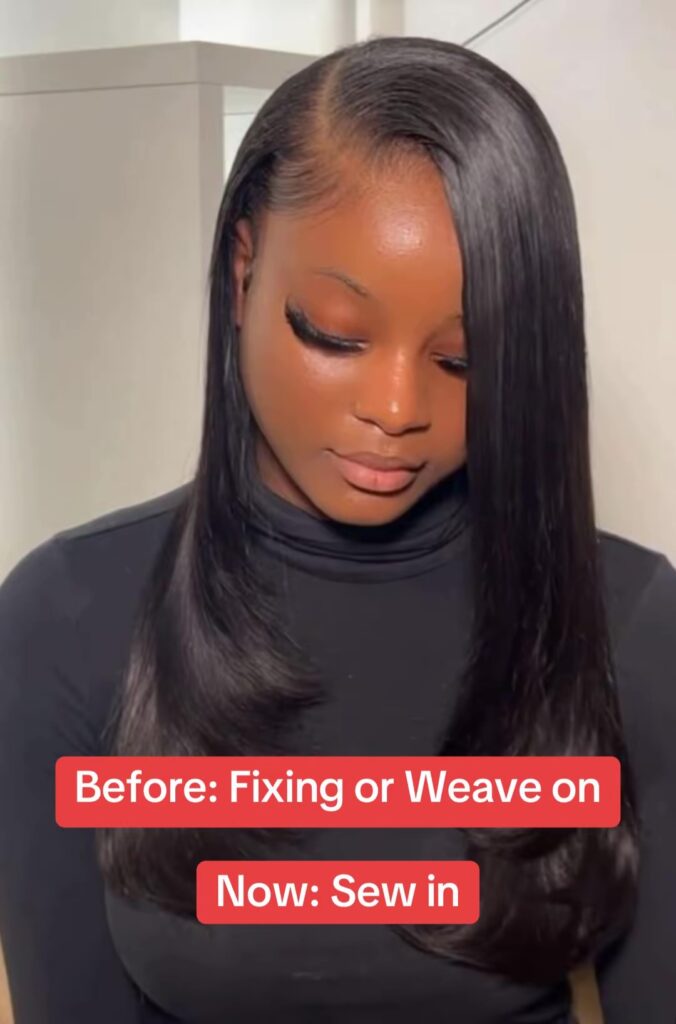
For years, fixing or weave-on was the go-to hairstyle for anyone who wanted fuller, longer hair without waiting for their natural hair to grow. Whether it was straight, curly, or wavy, there was a weave-on for every occasion. These days, sew-in is a popular term for extensions attached to braided natural hair using a needle and thread.
3. Rihanna or Skull Cap – Now Called Pixie Cut
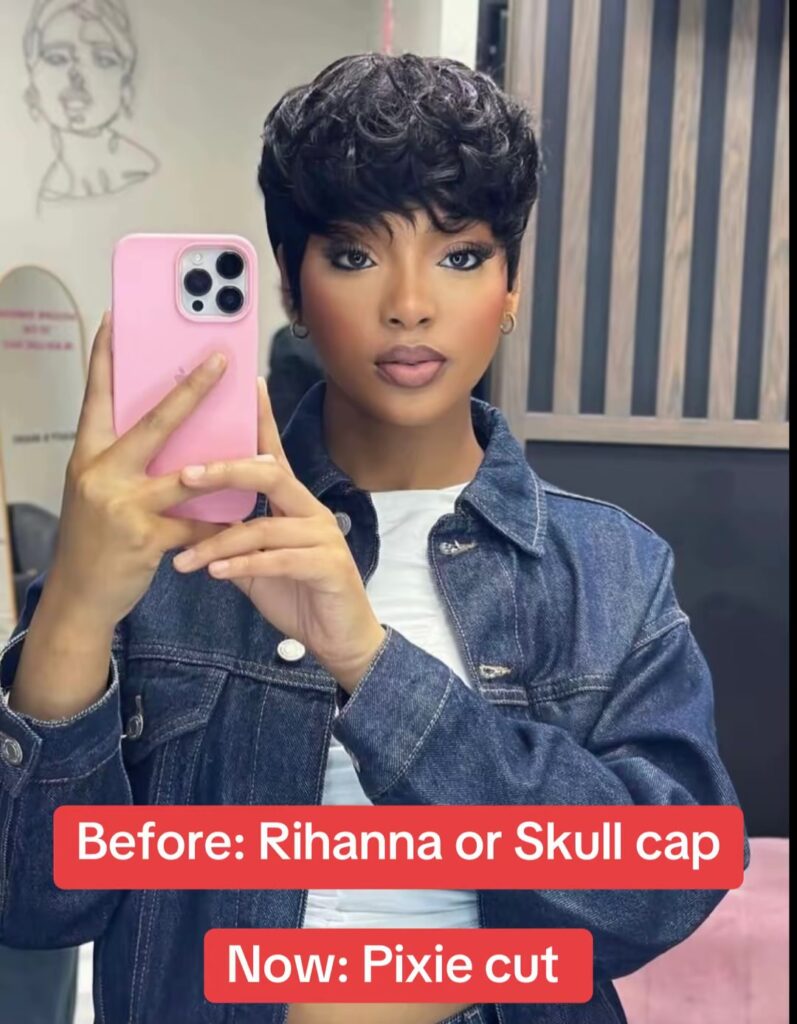
The Rihanna hairstyle was once a salon favourite for ladies who wanted a short, bold, and stylish look. Named after the singer’s iconic short hairstyles, it often featured closely cut sides and a fuller top. Today, pixie cut is a widely recognised name for short hairstyles with a chic, cropped finish
4. One Million Braids – Now Called Micro Braids
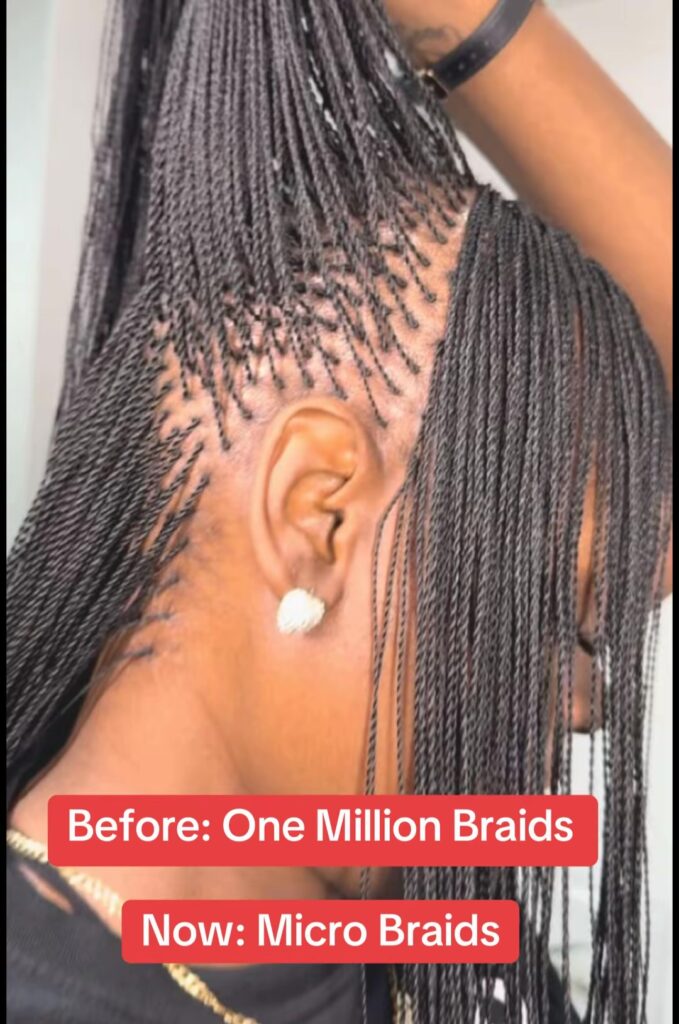
If you remember one million braids, you already know the dedication it took to sit through an entire braiding session! These tiny, individual braids gave the hair a full and detailed appearance. The modern term micro braids describes the same general style of very small braids, although the exact technique and size can vary.
5. Protective Threading – Now Called Kiko
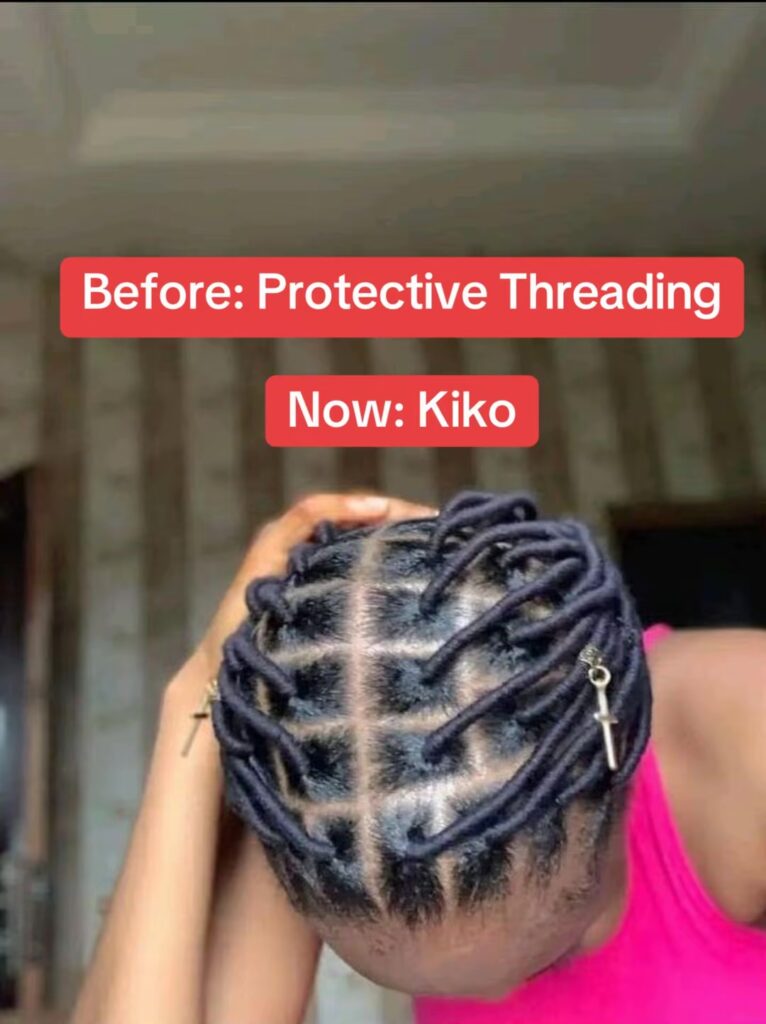
Before elaborate braided styles became the centre of attention, protective threading was already a familiar sight in many Nigerian homes. Known as kiko in Yoruba, this traditional technique involves wrapping thread around sections of natural hair. Beyond its cultural significance, it is also a way to stretch and protect the hair without relying on heat.
6. Bob Marley – Now Called Box Braids

Bob Marley was a popular name for a braided hairstyle that many Nigerian women loved for its versatility and distinctive appearance. Today, box braids is a familiar term for individual braids created from sections of hair, often divided into square-shaped parts. Although the two names are sometimes used interchangeably, not every Bob Marley style is technically a box braid.
7. Ghana Weaving – Now Called Feed-In Braids
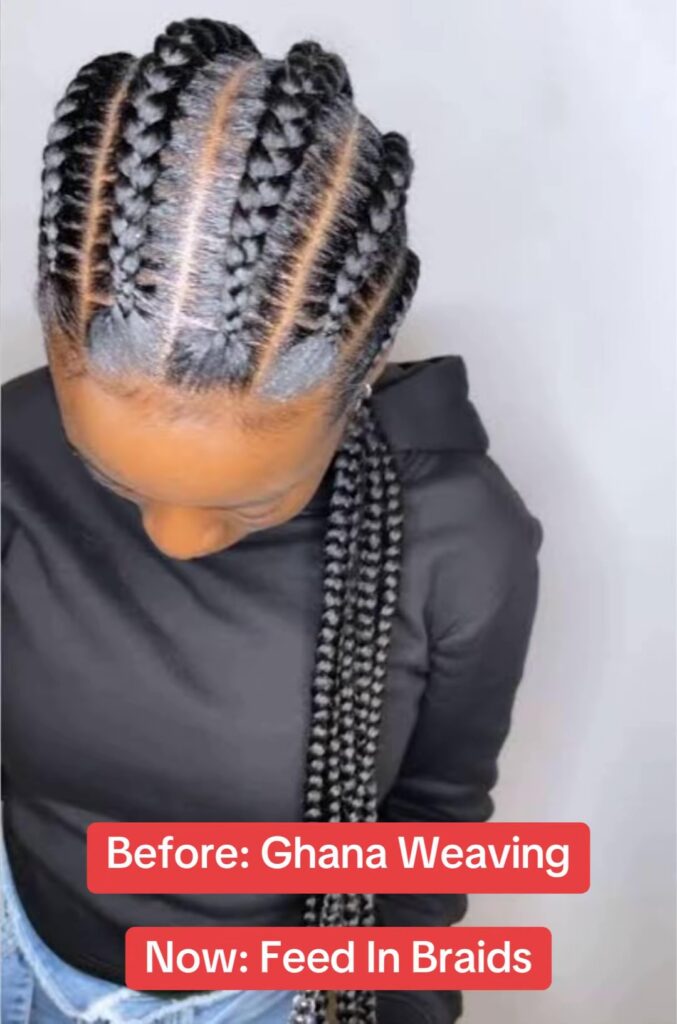
Ghana weaving has been a staple in Nigerian salons for generations. From straight-back patterns to elaborate designs, it is a hairstyle that never truly goes out of fashion. The term feed-in braids is now widely used for a braiding technique in which small amounts of additional hair are gradually incorporated to create a natural-looking finish. Many modern Ghana weaving styles use this technique.
8. All Back – Now Called Cornrows
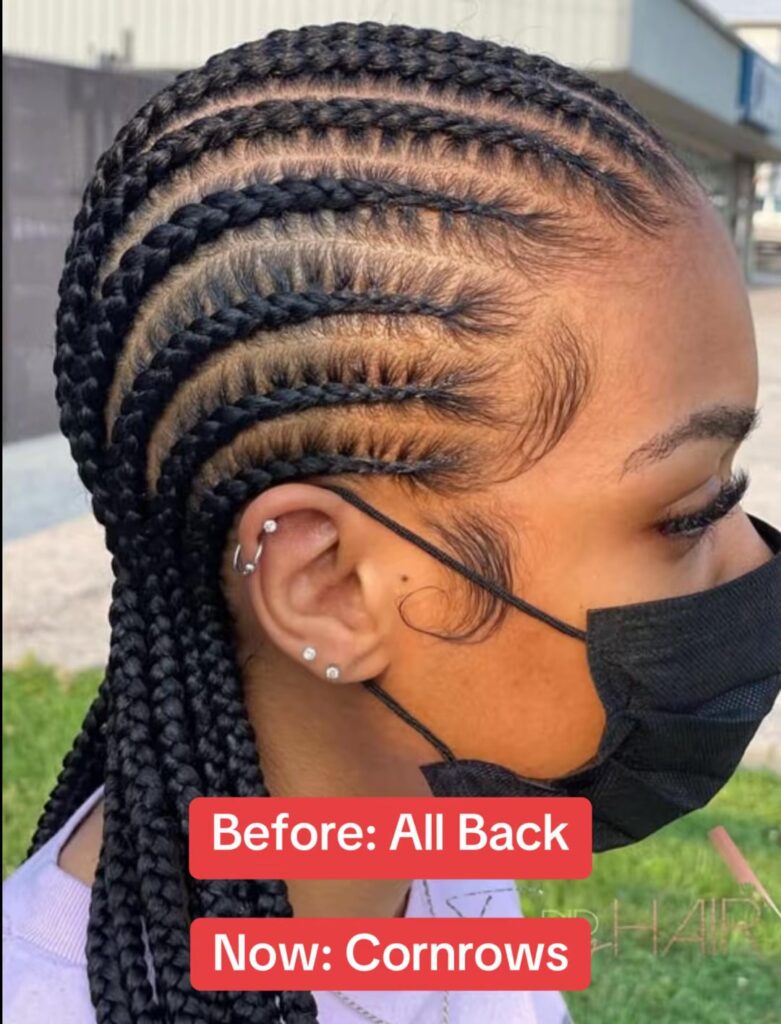
The all-back hairstyle was once one of the simplest requests you could make at a Nigerian salon. Neat, straight braids running from the front of the head to the back made it practical for school, work, and everyday activities. Today, cornrows is the widely recognised name for this type of close-to-the-scalp braiding, which can also be styled in different patterns
9. Watermelon Braids – Now Called Goddess Braids
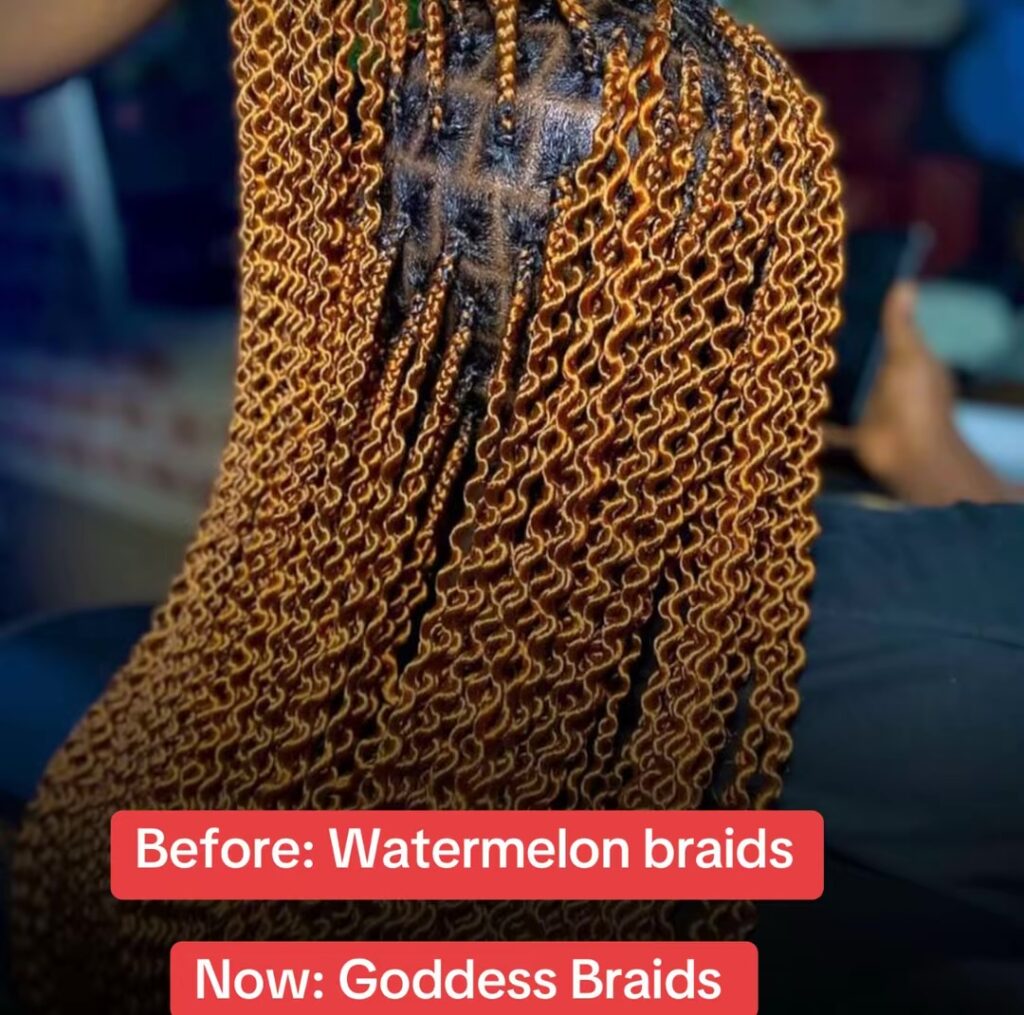
Watermelon braids were known for their distinctive, chunky braided appearance. Today, the name goddess braids is popular for elegant, often larger braids that can be styled in different ways. However, the terms do not always describe the exact same technique, as goddess braids can also feature curly or loose strands for a softer finish.
10. Feathers – Now Called Dolly Braids
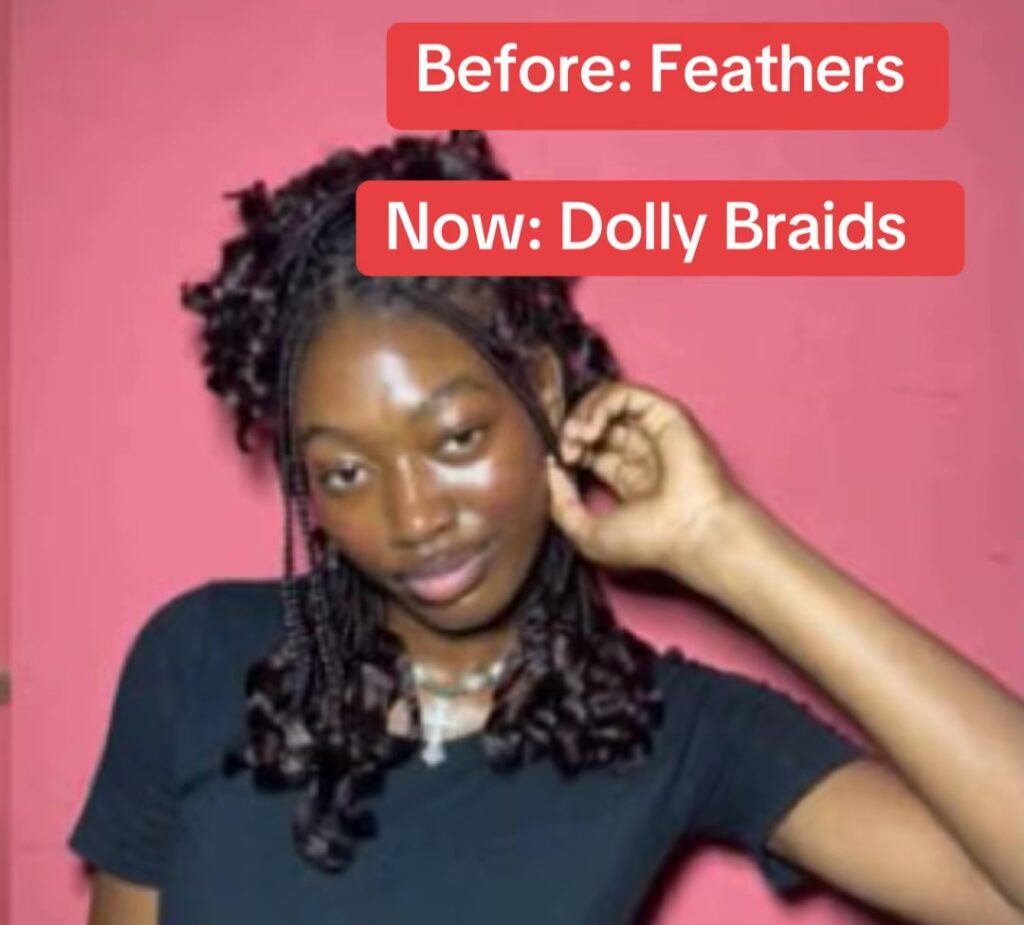
Feathers were a familiar hairstyle for anyone who loved braids with a fuller, more textured appearance. Depending on the style, they could give the hair a soft, playful finish. Dolly braids is a name used for certain modern braided looks, but the terminology can vary between salons and regions.
11. Fish Bone – Now Called Stitch Braids
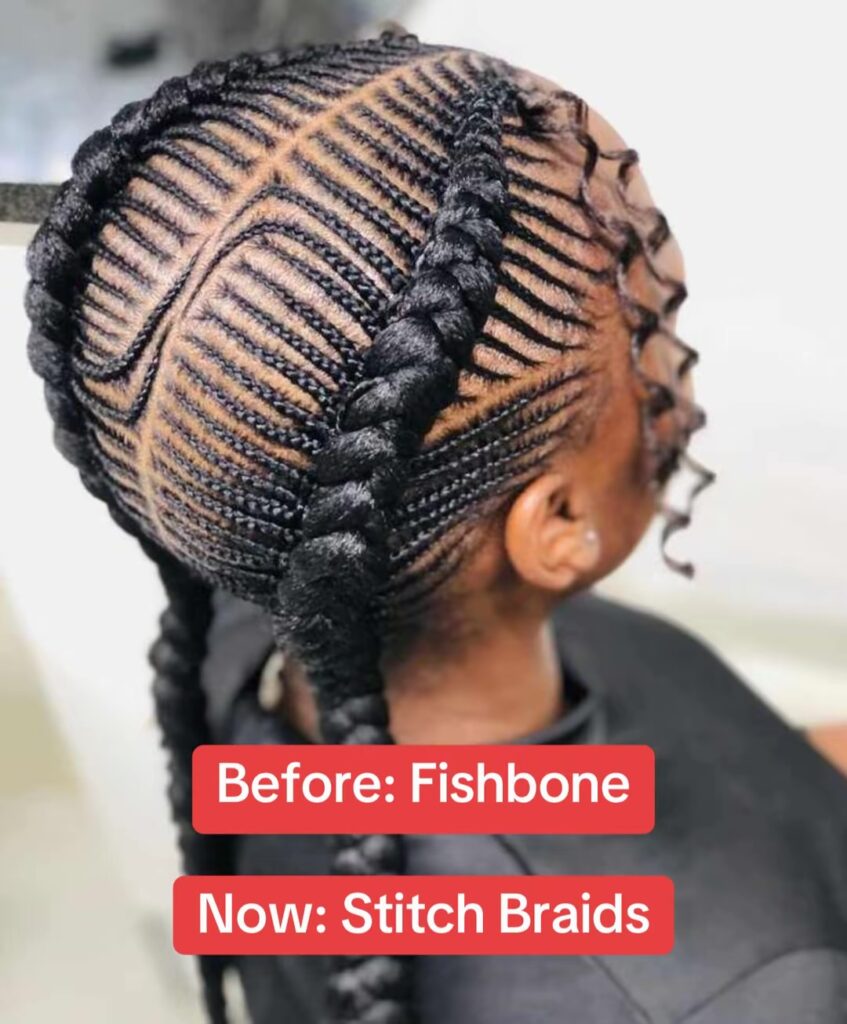
Fish bone was a recognisable name for intricate braiding patterns that created a striking, patterned finish. Today, stitch braids are popular for their clean, defined sections that create a stitched appearance along the scalp. The styles can look similar, but fish bone and stitch braids are not necessarily the same technique.
12. Calabar – Now Called Fulani Braids
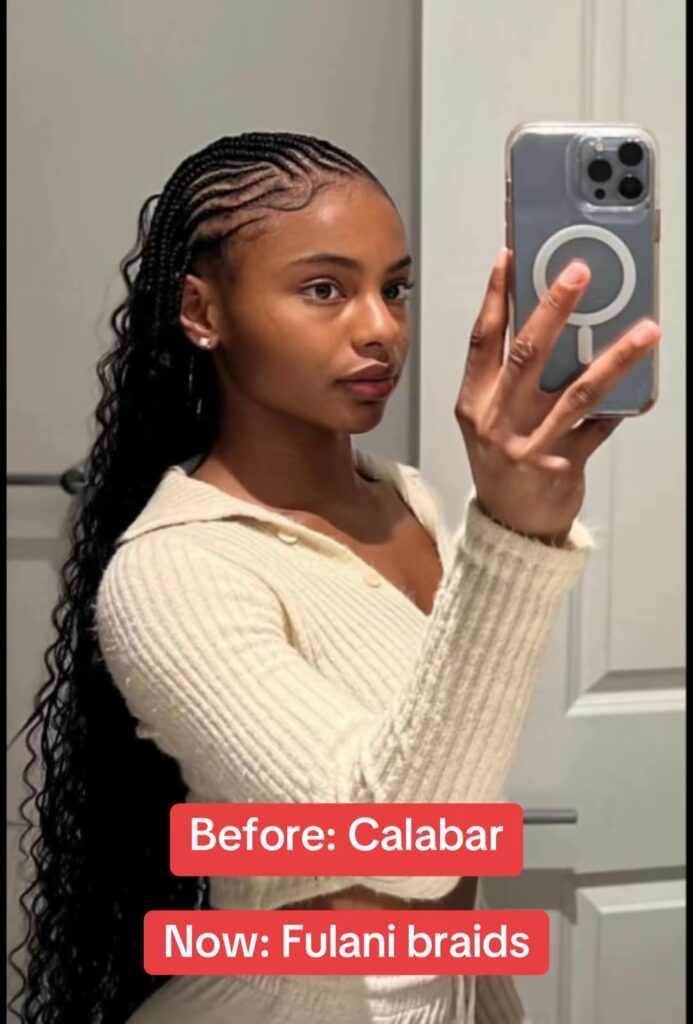
Calabar was a familiar name in Nigerian salons for braided styles featuring distinctive patterns and sometimes decorative accessories. Fulani braids are inspired by traditional Fulani hairstyles and often feature cornrows, individual braids, beads, and other adornments. Although some styles overlap, Fulani braids have specific cultural roots that make the name more than just a beauty trend.
13. Pick and Drop – Now Called French Curls
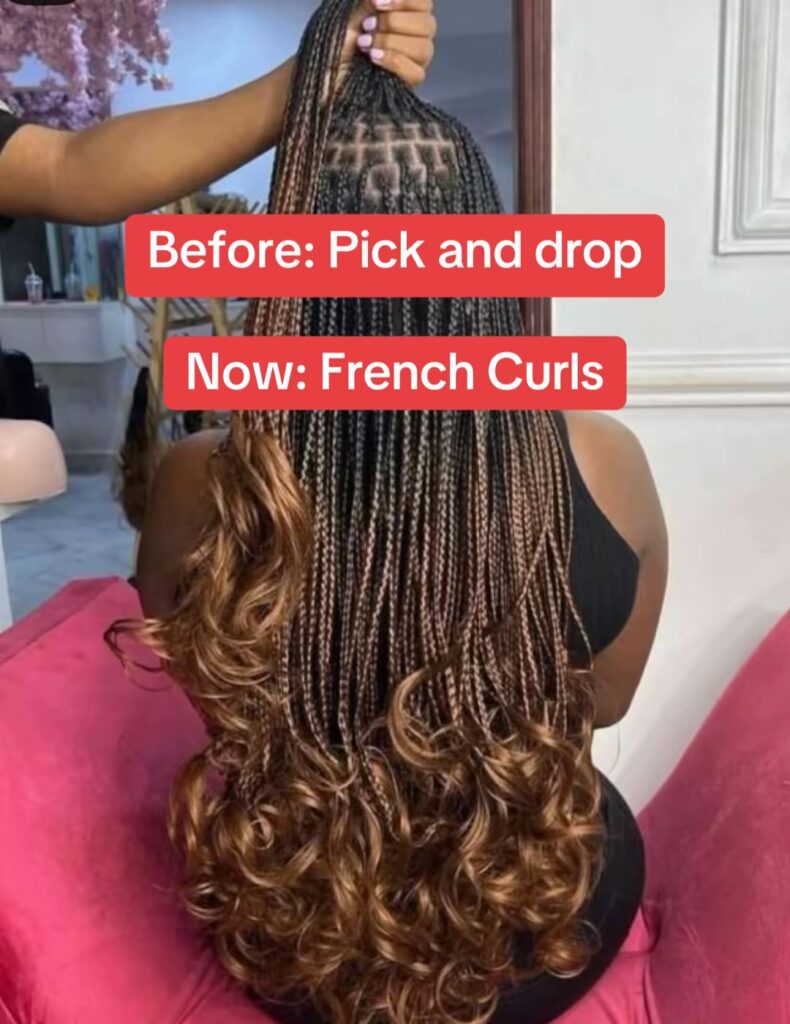
Pick and drop was a popular choice for ladies who wanted the appearance of long, flowing hair without having every strand braided from root to tip. The style often combined small braids at the roots with loose extensions. French coils is a term used for certain coiled or twisted hair-extension styles, although it does not refer to exactly the same technique as every pick-and-drop hairstyle.
14. Shuku – Now Called Braided Ponytail
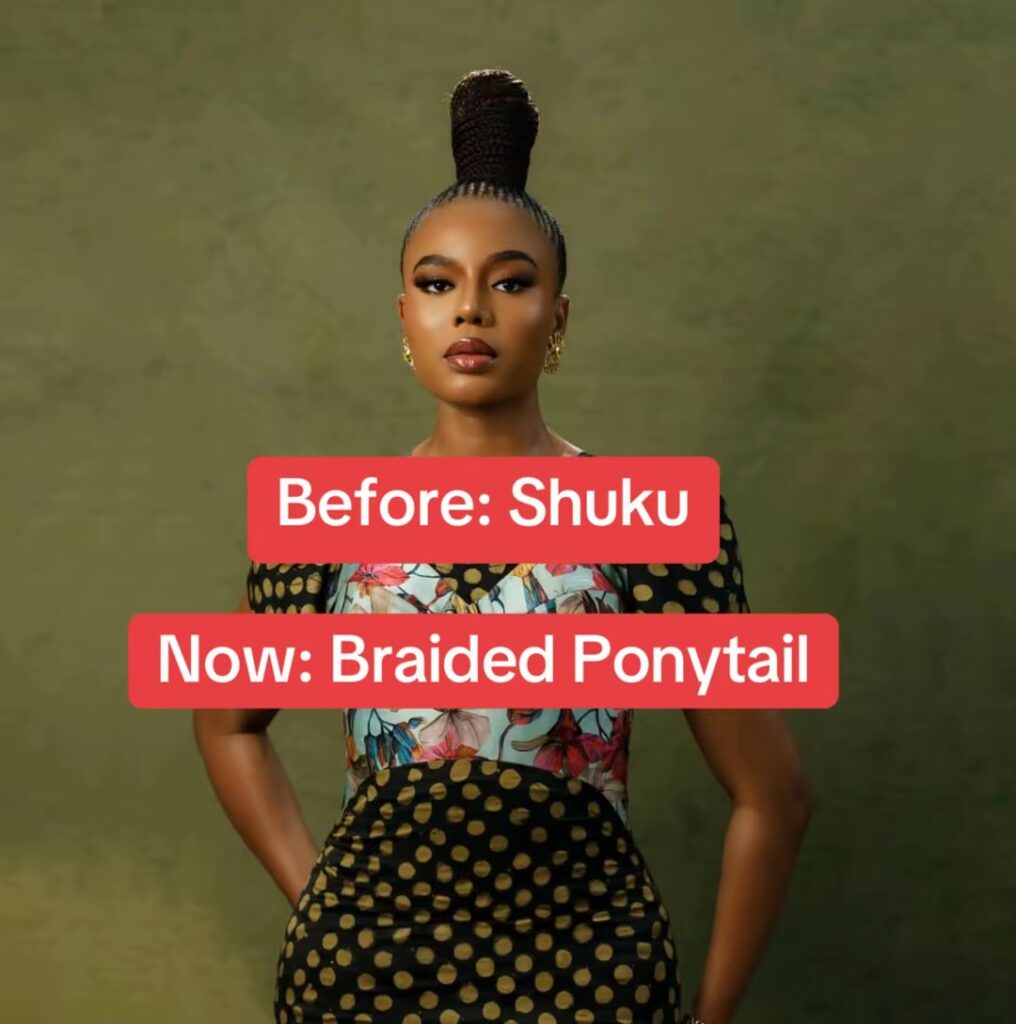
Shuku is a classic Nigerian hairstyle in which the hair is braided upwards towards the crown to form a raised pattern or braided bun. It has been worn for generations and remains popular for traditional occasions and everyday styling. Today, braided ponytail is a familiar description for styles where the braids are gathered into a ponytail. While the two can look similar, a traditional shuku has its own distinctive structure and cultural history.
Same Hairstyles, Different Generations?
One thing is certain: Nigerian hairstyles have always been creative, adaptable, and full of personality. While some of these names are genuinely different terms for similar techniques, others describe styles that only look alike or have evolved over time.
Gen Z may have introduced new vocabulary through social media, but Nigerian hairstylists and their customers have been setting trends for decades.
So, which of these hairstyles did you know by its old name? And which one do you think Gen Z has renamed the most?
Tell us in the comments!
Leave a Reply